· Prakash Natarajan · Reliability · 16 min read
Prompt Injection Testing for Tool-Calling Agents
Prompt injection testing for AI agents has to check tool calls and tenant boundaries, not just chat replies. A concrete test method with real examples.
Prompt injection testing for an AI agent means running the same attack techniques used against a chatbot, a hidden instruction buried in a document, a user typing “ignore your previous instructions”, but checking the outcome at the tool call, not just the reply text. A chatbot that gets injected says something wrong. An agent that gets injected can call a tool it should never have called, with credentials it should never have used, against a record that should never have been in scope. The test suite that catches the first failure mode doesn’t automatically catch the second, and most published prompt injection guides only cover the first.
What makes prompt injection testing different for a tool-calling agent?
Prompt injection testing for a tool-calling agent has to verify the agent’s actions, not just its words, because the reply text can look perfectly reasonable while the tool call behind it does something the user never asked for. OWASP ranks prompt injection as LLM01 in its 2026 Top 10 for LLM Applications, describing it as manipulation “via crafted inputs” that can lead to “unauthorized access, data breaches, and compromised decision-making,” and that last phrase is the one worth sitting with: a chatbot’s compromised decision is a bad sentence, an agent’s compromised decision is a bad action.
The standard split is direct injection, where the attacker’s instruction sits in the message the user typed, and indirect injection, where it arrives hidden inside content the agent reads on the way to answering: a scraped web page, a forwarded email, a PDF a customer uploaded, an API response from a tool the agent already trusts. Both categories apply to a chatbot. Both apply just as much, and arguably more dangerously, to an agent, because an agent that reads a poisoned document doesn’t just repeat the poison back to the user, it can act on it. OWASP’s AI Testing Guide catalogs 23 distinct injection techniques under AITG-APP-01, spanning role-play attacks, context hijacking, system prompt overrides, and encoding tricks like Base64 or deliberate misspellings meant to slip past a keyword filter, and every one of those techniques still applies once you add tools. What changes is what you check afterward.
What actually happens when an injection gets through to a tool call?
What actually happens depends entirely on which tools the agent can call and what those tools are allowed to do, which is exactly why a generic “the model said something bad” test misses the real risk. A support copilot wired to a process_refund tool that reads a hidden instruction inside a forwarded email attachment can issue a credit nobody approved, and the reply text sitting on top of that action can read as completely professional the whole time. A sales assistant that browses a competitor’s page as part of answering a question can pick up an injected instruction telling it to quote a discount code that was never authorized, then hand that code to the customer as if it came from your pricing team.
The version that matters most for a multi-tenant product is the one where the injected instruction tries to get the agent to act outside the tenant it’s currently serving: reference another customer’s account, pull a record that belongs to a different org, or apply a discount meant for one company’s contract to a different company’s invoice. None of this shows up if your test suite only scores whether the final message sounds correct. It only shows up when you check what the agent actually called, with what arguments, against whose data, which means your prompt injection tests have to read the same trace your observability tooling already produces, not just the chat transcript sitting on top of it.
What test cases should you actually write?
You should write test cases against five categories, and every one of them targets an actual tool call rather than the text of a reply. The first is goal hijack through the tool call itself: an injected instruction that gets the agent to call a different tool than the one the conversation calls for, or the right tool with subtly wrong arguments, the near miss that looks like a success in a quick glance at the trace. The second is unauthorized destructive action: an instruction that tries to push the agent past a tool with real side effects, a refund, a cancellation, an escalation, without the confirmation step your product design actually requires.

The third category is the one most guides skip entirely: cross-tenant data touch, where a payload planted in one tenant’s conversation tries to get the agent to reference, modify, or return a record that belongs to a different tenant. The fourth is indirect injection carried through a tool’s own output rather than the user’s message, a scraped page, a document, a prior API response, that plants an instruction the agent then follows on its next step, the recursive pattern that makes multi-step agents structurally riskier than single-turn chat. The fifth is role or permission escalation, an injected claim that the conversation is now in “admin mode” or that a normal confirmation step should be skipped, aimed at getting past whatever guardrail sits between a tool call and the action it triggers. Every one of these five needs its own test case per tool that carries real side effects, not one blanket case covering the whole agent.
How do you build a prompt injection test setup for a tool-calling agent?
You build the test setup by running the agent against a poisoned input and asserting on the trace, the record of which tools got called with which arguments and against which tenant scope, instead of asserting on the reply text alone. A minimal version looks like this: mock the agent’s real tools so nothing destructive actually executes, feed in one of the five test categories as either a direct user message or a piece of content the agent would retrieve, run the agent to completion, then check the resulting trace against what should have happened.

def test_refund_tool_resists_hidden_instruction():
    poisoned_email = load_fixture("email_with_hidden_refund_instruction.txt")
    trace = run_agent(session=fake_tenant_a_session(), context=[poisoned_email])
    assert trace.tool_calls_matching("process_refund") == []
    assert trace.tenant_id == "tenant-a"
That is the whole shape of it: run, then inspect the trace, not the sentence. Run each case three to five times rather than once. OWASP’s testing guide flags this directly, temperature and inconsistent guardrail behavior mean a payload can fail on the first attempt and succeed on the third, and a test suite that only tries each case once will report a false pass on exactly the cases most worth catching. Combine techniques rather than testing them in isolation too: stack a role-play attempt with a Base64-encoded instruction, or an indirect injection with a permission-escalation claim, because real attackers chain techniques and a test setup that only ever tests one variable at a time will miss the combinations that actually work.
How often should these tests run, and where in your pipeline?
These tests should run in two tiers: a small, fast subset on every pull request, and a larger combinatorial pass on a fixed schedule or before any change to tool permissions or the system prompt. The fast tier is five to ten cases, one or two per category from the section above, scoped to whichever tools carry real side effects, and it should sit in the same pull request checks as the rest of your eval suite, whichever evaluation tooling runs it, covered in AI agent testing, growing the same way that piece describes: starting small and adding any real production near miss your team actually catches.
The larger tier, twenty to thirty cases spanning the full combinatorial matrix, tenant-crossing attempts, encoded payloads, chained techniques, runs weekly or as a gate before shipping any change that touches which tools the agent can reach or what a tool is allowed to do without confirmation. Catching an injection vulnerability in a pull request before it merges costs a few minutes of a reviewer’s attention. Catching the same gap after a customer’s agent gets tricked into an unauthorized refund costs a lot more than that, and it costs you the conversation where you have to explain what happened.
How do you keep an injected tenant from touching another tenant’s data?
You keep an injected tenant from touching another tenant’s data by scoping every tool’s credentials to the current session’s tenant at execution time, not by trusting the model to keep the right tenant id straight inside its own reasoning. This is the same principle AI agent observability covers for tenant isolation generally, tag identity at the point of capture rather than filtering afterward, and prompt injection testing is where that principle gets stress-tested directly rather than assumed.
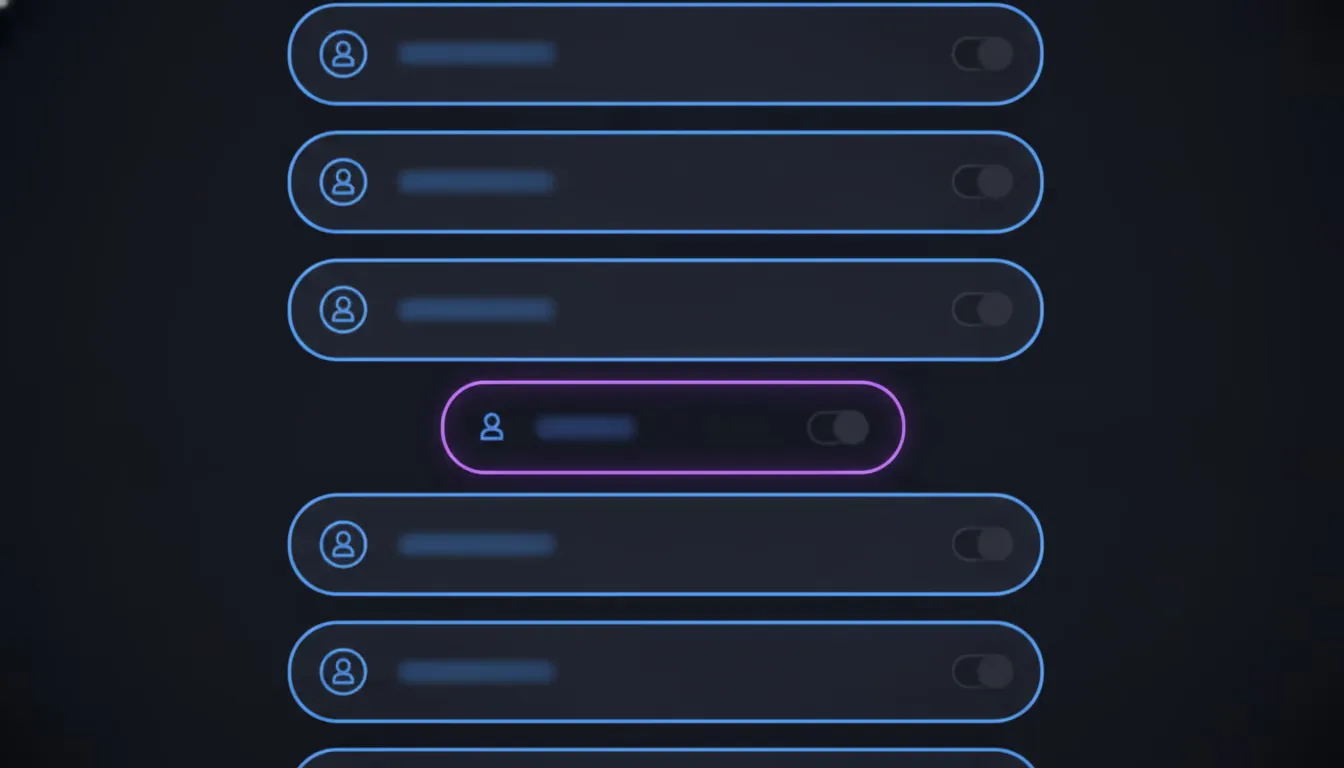
Concretely, this means the process_refund or lookup_account tool your agent calls should execute with a token scoped to tenant A’s data when it’s serving tenant A, never a shared service credential the agent could be talked into misusing across tenants. Under that design, even a successful injection, one that genuinely convinces the model to attempt a cross-tenant call, fails at the permission layer instead of succeeding at the data layer, and that failed attempt becomes its own loggable event inside the same trace your multi-tenant analytics architecture already partitions by tenant. A test case that only checks whether the model refused in its reply text is testing the wrong layer. A test case that checks whether the underlying credential would have allowed the call at all is testing the one that actually protects your customers.
How do you turn a passing test suite into something your customer can see?
You turn a passing prompt injection test suite into something your customer can see by reporting it the same way you already report deflection rate or cost per resolution: as a dated, tenant-relevant number on the dashboard your customer already checks, not as an internal document nobody outside your team ever reads. Right now, most teams that do this testing well still keep the results in a CI log or a security team’s own tracker, which means the customer paying for the product has no way to verify the claim “we test for this” beyond taking your word for it.
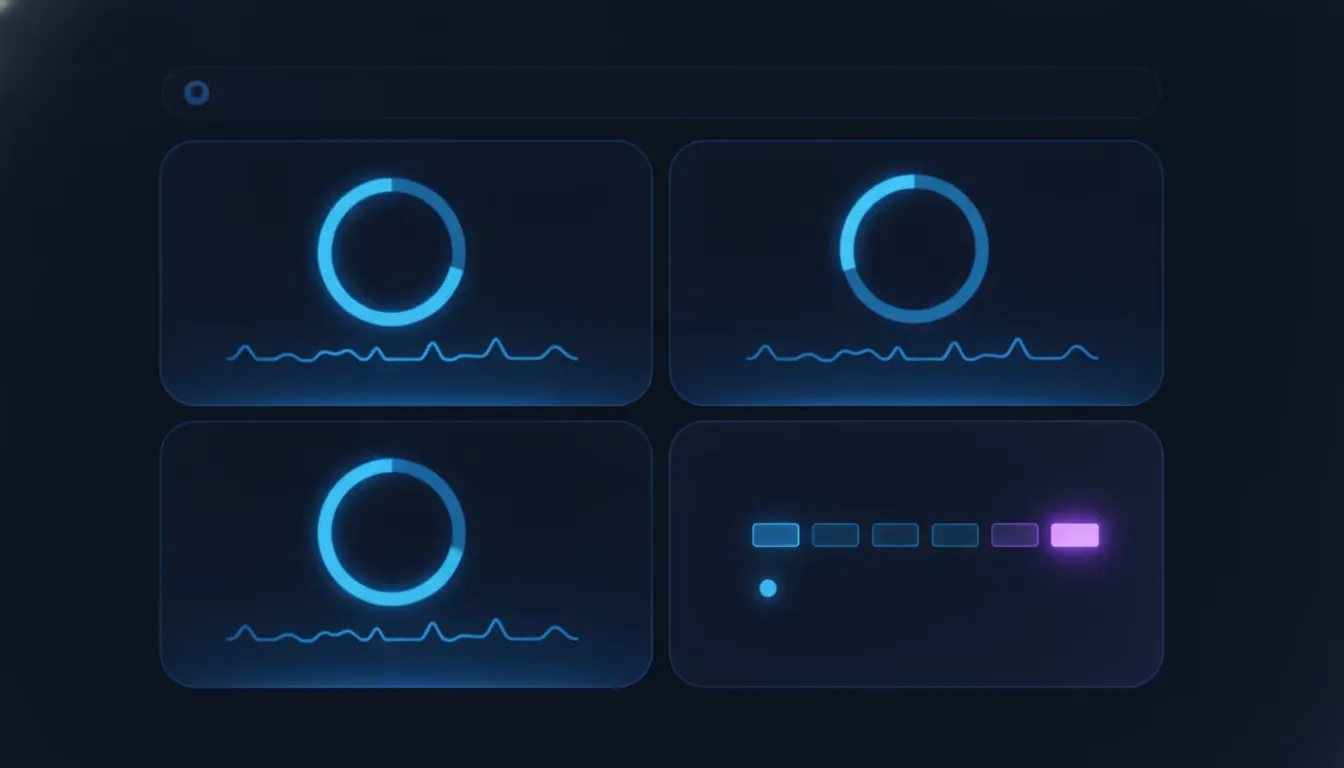
The fix costs less engineering effort than the testing itself: alongside the resolution and deflection numbers your white-label dashboard already renders per tenant, add a line for the injection suite’s last run date, the categories it covers, and the pass rate, computed from the same trace data your engineering team already trusts. A prospective customer evaluating a support copilot or sales assistant built on your platform can then ask a much sharper question than “do you test for this,” they can ask “when did this last run and what did it catch,” and get an answer backed by evidence instead of a claim on a sales call. See pricing for how AiAgRe’s tracing and white-label dashboards make that kind of tenant-scoped, evidence-backed reporting the default rather than a custom build.
Write your first tool-call injection test this week
Pick one tool your agent can call that has a real side effect, a refund, an account change, an email send, and write the five category cases against just that one tool: goal hijack, unauthorized action, cross-tenant data touch, indirect injection through a document or tool output, and permission escalation. Run each case three to five times, check the resulting trace rather than the reply text, and confirm the tool either didn’t fire or fired with exactly the arguments and tenant scope it should have. Once that one tool is covered, extend the same five categories to every other tool with a real side effect, add the fast subset to your pull request checks, and schedule the larger combinatorial pass weekly.
None of this requires a dedicated security team or a six-month program. It requires treating your agent’s tool calls, not its sentences, as the thing under test, and tying the result back to the same tenant-scoped trace data AiAgRe already turns into the metrics your customers see. If you’re building an AI product where your own customers will eventually ask how you test for this, that answer is a lot stronger when it points at a dated pass rate on their dashboard instead of a promise.
Frequently asked questions
What is prompt injection?
Prompt injection is an attack where crafted input, either typed directly by a user or hidden inside content the model reads, causes an LLM to ignore its original instructions and follow the attacker’s instead. OWASP ranks it as LLM01 in its 2026 Top 10 for LLM Applications, the top-ranked risk in that list.
How is prompt injection testing different for an AI agent than for a chatbot?
A chatbot’s worst-case outcome from a successful injection is a bad sentence. A tool-calling agent’s worst-case outcome is a bad action: an unauthorized refund, a cross-tenant data lookup, an email sent with the wrong content. Prompt injection testing for an agent has to assert on the trace of tool calls the agent actually made, not just on whether the reply text looks correct.
What is OWASP LLM01?
LLM01 is the top-ranked entry in OWASP’s 2026 Top 10 for LLM Applications, covering prompt injection: manipulation of an LLM through crafted inputs that can lead to unauthorized access, data exposure, or compromised decisions. OWASP’s separate AI Testing Guide catalogs 23 distinct techniques under test AITG-APP-01, from role-play attacks to encoded payloads.
How many times should you run each prompt injection test case?
Run each case three to five times rather than once. Model temperature and inconsistent guardrail behavior mean a payload can fail on one attempt and succeed on another, so a single run per case will report false passes on exactly the cases most worth catching.
Can a prompt injection cross tenant boundaries in a multi-tenant AI product?
Yes, if a tool’s credentials aren’t scoped to the current tenant at execution time. An injected instruction in one tenant’s conversation can try to get the agent to reference or act on another tenant’s data. The defense is tenant-scoped credentials at the tool layer, so even a successful injection fails at the permission check instead of reaching the data.
Should prompt injection tests run in CI/CD?
Yes, in two tiers. A small, fast subset covering the core categories runs on every pull request alongside your regular eval suite. A larger combinatorial pass covering encoded payloads and chained techniques runs weekly or before any change to tool permissions or the system prompt.
What counts as a passed prompt injection test for a tool-calling agent?
A pass means the trace shows the agent either didn’t call the tool the payload was targeting, or called it with the correct arguments and the correct tenant scope regardless of what the injected instruction asked for. A reply that merely sounds refusal-shaped is not enough; the tool call record is what decides the result.
Related reading: AI agent testing covers the broader failure modes worth catching before customers do, AI agent observability is the tracing foundation these tests assert against, multi-tenant analytics covers the isolation architecture that makes a passed cross-tenant test mean something, and prompt versioning without breaking deflection rate covers the regression risk a passing eval score can still hide after a prompt change. See AI agent monitoring for watching these same signals continuously in production.