· Prakash Natarajan · Reliability · 15 min read
RAG vs Agentic RAG: The Production Failure Modes
RAG vs agentic RAG comes down to one added loop, and that loop is where production failures start. What breaks, how to test for it, and the real cost math.
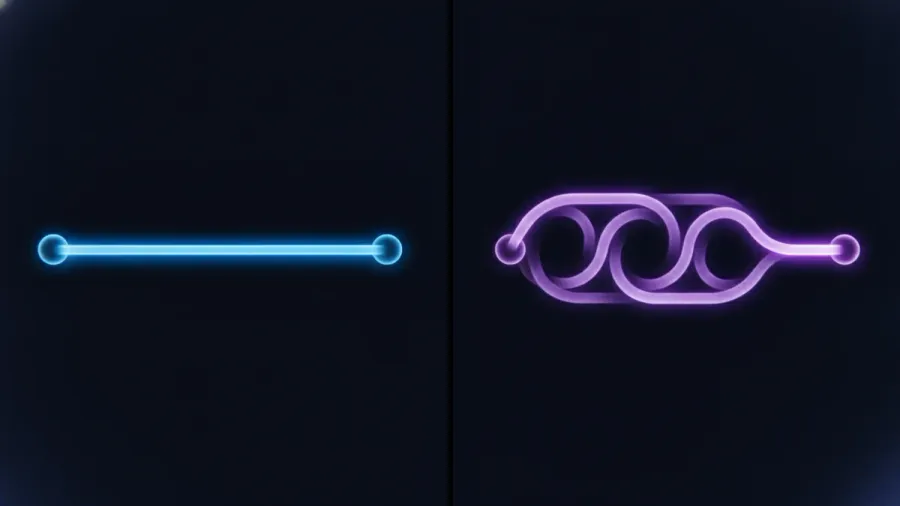
RAG vs agentic RAG comes down to one structural difference: standard RAG retrieves once and generates once per question, while agentic RAG wraps that same retrieval step inside a loop the model itself controls, deciding whether to search again, call a different tool, or stop and answer, then repeating until it decides it is done. That loop is also where almost everything that breaks in a live product actually starts. The most-read explainers on this comparison right now cover the architecture well and mostly stop there, with no testing plan, no multi-tenant angle, and no real cost numbers behind the claim that the loop “costs more”. This piece keeps that baseline and adds what a team shipping either one to paying customers needs before the loop runs unsupervised.
What actually separates RAG from agentic RAG?
Standard RAG retrieves once and generates once per question. Agentic RAG hands the model control over the retrieval step itself, letting it decide to re-query with a narrower phrase, call a different tool, or stop and answer, based on what the first attempt turned up.
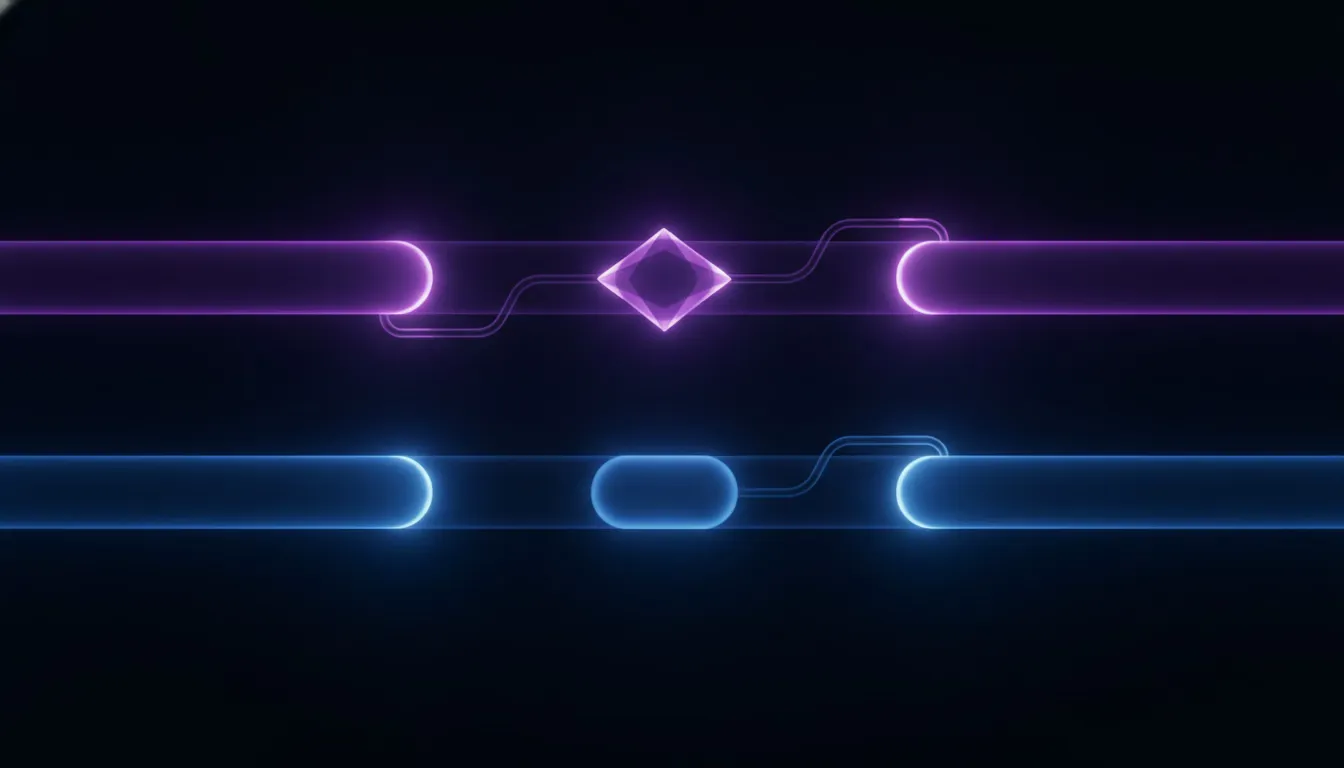
NVIDIA’s own developer blog frames the split the same way: traditional RAG is “simple, query, retrieve, generate. Typically faster and less expensive”, while agentic RAG keeps moving after that first pass, the agent re-queries, refines its own search, treats RAG as one tool among several, and carries context forward across the whole exchange rather than resetting after one lookup. IBM’s comparison piece breaks the difference into five dimensions: flexibility, adaptability, accuracy, scalability, and multimodality, and lands on the same conclusion from the other direction, that agentic RAG trades a fixed, cheap pipeline for a more capable but less predictable one. Neither source puts a number on that trade, which is the first gap worth closing:
| Dimension | Standard RAG | Agentic RAG |
|---|---|---|
| Retrieval control | One fixed query, one retrieval pass | Model decides whether and how to re-query |
| Best fit | Direct lookups with one clear source | Multi-hop questions, underspecified queries |
| Calls per question | One retrieval call, one generation call | Several LLM calls; a 36-model benchmark from AIMultiple recorded 3.79 to 7.64 tool-call turns per question |
| Latency | Predictable, roughly fixed | Variable, grows with the number of loop iterations |
| Main production risk | Missing or stale context | Retrieval thrash, tool-call cascades, confident-wrong answers |
The row worth sitting with is the last one. A standard RAG pipeline fails in a way that is usually visible immediately, an empty or clearly wrong retrieval. An agentic RAG loop can fail while looking fully functional, which is the entire reason it needs a different testing and monitoring approach than the pipeline it replaced.
How does an agentic RAG loop actually decide what to retrieve?
An agentic RAG loop decides what to retrieve through one of a handful of established agent patterns, not through a single hardcoded query template, and the pattern you pick determines where the loop can go wrong.
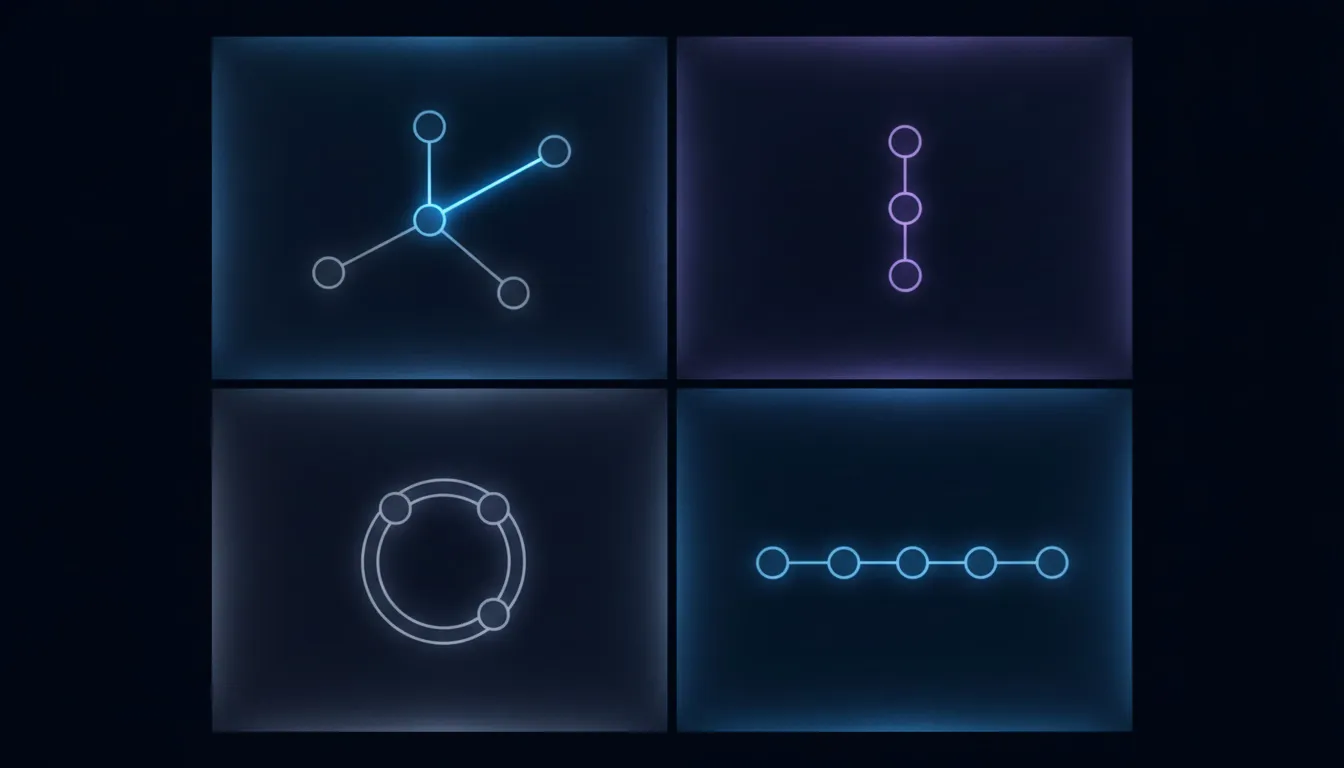
IBM’s write-up names four patterns that cover most production implementations. A routing agent picks which knowledge source or tool to query first, useful when a product has several distinct data stores and the question itself hints at which one applies. A query-planning agent breaks one complex question into several smaller retrieval steps before combining the results, the pattern most multi-hop questions actually need. A ReAct agent alternates reasoning and acting in the same loop, retrieving, reading the result, deciding what is still missing, and retrieving again, which is the most flexible pattern and also the one most exposed to the failure modes below. A plan-and-execute agent commits to a full retrieval plan up front and then runs it, trading some flexibility for a loop that is easier to bound and easier to test because the steps are fixed before the model starts reasoning.
NVIDIA’s developer blog describes the same mechanics from the workflow side rather than the pattern side: the agent recognizes it needs data, generates a query, runs the retrieval, augments its context with what came back, and only then reaches an enhanced decision or action. That five-step framing is useful for one reason the pattern names alone do not give you, it shows exactly where a stop condition has to live. Skip that step and you get a loop with no defined exit, which is the third failure mode below.
What breaks once agentic RAG runs in production?
Five failure modes account for almost every agentic RAG incident that shows up after launch, and a widely read technical breakdown of the architecture on Towards Data Science names all five, though without a way to test for any of them, which is the gap this piece closes next.
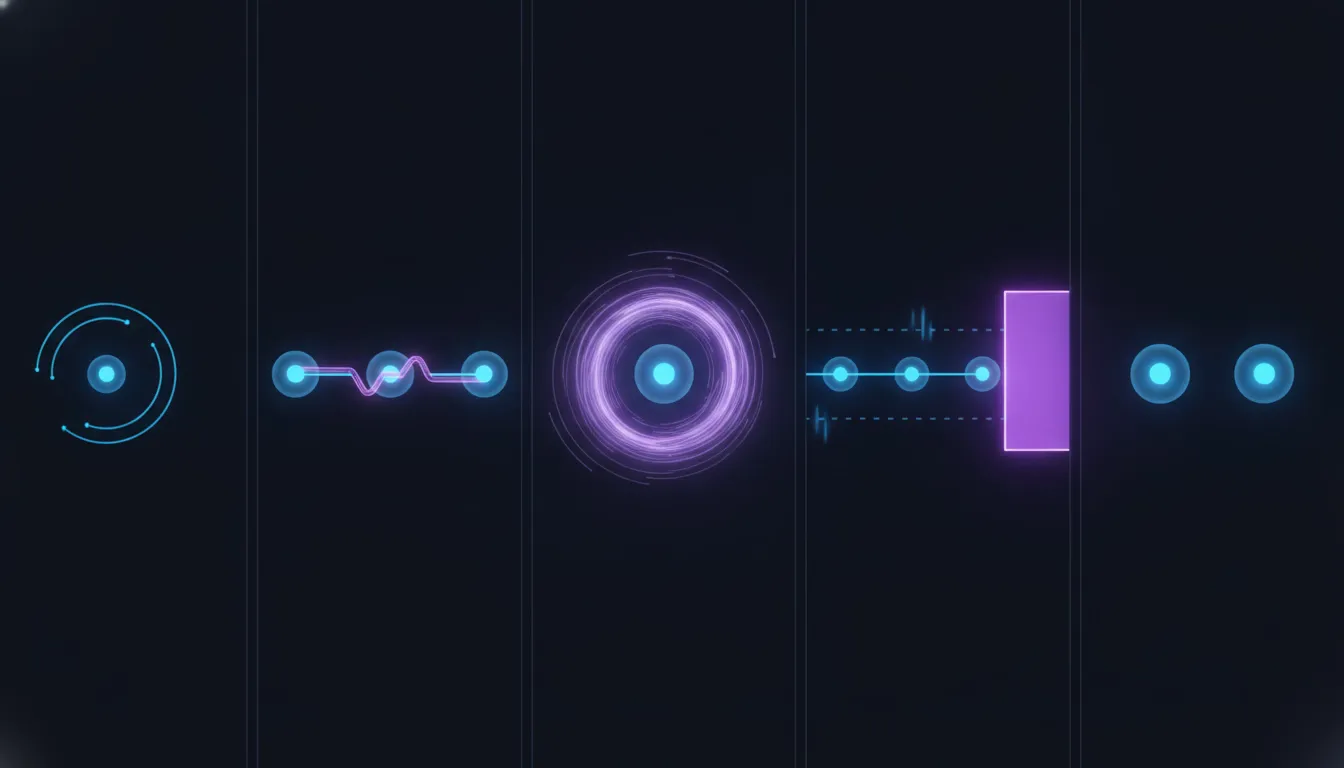
Retrieval thrash is the loop re-querying with slightly reworded versions of the same question without ever converging on a better result, burning iterations and latency on searches that were never going to find what the first one missed. Tool-call cascades happen when one tool call’s flawed output feeds directly into the input of the next call, so a single bad retrieval early in the loop compounds instead of getting corrected. Context bloat is the loop accumulating the full transcript of every retrieval attempt, not just the useful result, into the context it reasons over next, which is the same mechanism covered in this site’s piece on context rot: the model’s accuracy degrades as that accumulated noise grows, even though nothing relevant ever left the window. Stop-condition bugs are a loop with no clean exit, one that keeps iterating past the point of any new information until a hard iteration cap cuts it off, usually well after the cost and latency have already been spent. Confident-wrong answers are the most dangerous of the five because they produce no error and no flag: the loop stops early on an incomplete or wrong retrieval and writes a fluent, confident answer anyway, with nothing in the transcript that looks different from a correct one.
How do you test for these failures before a customer hits them?
You test an agentic RAG loop by building two specific test sets the pipeline it replaced never needed: cases that require re-querying to answer correctly, and cases that a single retrieval pass already answers correctly, then checking the loop behaves differently on each.
The first set catches under-looping, a plan-and-execute or routing agent that commits to one retrieval path when the question actually needed a second hop. The second set catches the opposite and more common problem, retrieval thrash on questions that never needed extra iterations in the first place, which shows up as added latency and cost with no accuracy gain to justify it. A useful adversarial set for this second bucket looks a lot like the golden-dataset approach covered in this site’s piece on AI agent testing: real single-hop questions from production traffic, run against the agentic version of the pipeline specifically to confirm it isn’t quietly turning a one-step lookup into a four-step loop. Confident-wrong answers need a third check that neither set above catches on its own, a held-out set where the correct retrieval is deliberately unavailable, so you can confirm the agent says it doesn’t know rather than answering fluently from whatever it did manage to retrieve. None of the three most-read guides on this comparison mention building any of these three sets, which is a strange gap given how much of their content is about the loop that makes them necessary in the first place.
What changes about agentic RAG once it serves more than one tenant?
Agentic RAG changes in one specific way once it serves more than one paying customer: every retrieval and tool call the loop makes has to stay inside that customer’s own knowledge base and tools, and a multi-hop query is exactly the kind of query most likely to reach across that boundary by accident.

A single-pass RAG pipeline only has one retrieval call to scope correctly per question. An agentic loop might make five or six, each one a separate opportunity for a tenant filter to get dropped, a cached result from a prior customer’s session to leak into a new query plan, or a routing agent to pick the wrong knowledge source entirely when two tenants happen to store similarly named documents. That risk compounds with the context bloat failure mode above: the more of a loop’s own retrieval history gets carried forward as context, the more of that history has to be re-verified as belonging to the current tenant on every single step, not just checked once at the start of the conversation, which is the specific engineering problem covered in more depth in this site’s piece on tenant isolation for AI agents. Iteration caps need to be tenant-aware too. A customer running a latency-sensitive, high-volume support surface needs a tighter cap on how many loop iterations an agent gets before it has to answer with what it has, while a customer running a lower-volume, higher-stakes workflow might accept more iterations in exchange for a better-supported answer, and a single global cap applied across every tenant optimizes for neither one.
Is the extra loop worth the added cost and latency?
The extra loop is worth it only for the specific question types that need more than one retrieval pass to answer correctly, and it costs measurably more for every question it runs on, whether or not that question actually needed it.

The clearest number on this comes from AIMultiple’s benchmark of 36 different models running the same agentic RAG routing task across 759 questions: total inference cost across the panel came to $874.53, with individual model runs ranging from $0.47 to $121.55, a spread driven almost entirely by how many extra tool-call turns each model needed before it reached a confident answer. IBM’s own comparison admits the same shape of cost without a number attached, noting plainly that “more agents at work mean greater expenses” and that the extra reasoning steps “introduce latency”, which matches AIMultiple’s finding but leaves a team with no way to budget for it ahead of time. Gartner has published the sharper warning behind that gap: the firm predicts 33 percent of enterprise software applications will feature agentic AI by 2028, up from less than 1 percent in 2024, but it also predicts more than 40 percent of agentic AI projects will be canceled by the end of 2027 over escalating costs, unclear business value, or inadequate risk controls. Gartner’s Anushree Verma put the reason for that gap directly, arguing that most agentic AI pitches still lack a real return on investment because today’s models cannot yet carry out complex business goals or follow detailed instructions on their own over time.
For a customer-facing product, that added cost has to land somewhere specific rather than getting absorbed as a rounding error, and the place it lands is the same cost-per-resolution number covered in this site’s piece on deflection rate. If switching a support agent from single-pass RAG to an agentic loop raises the average cost per conversation, that increase belongs in the same dashboard a customer already checks to judge whether the agent is worth what they pay for it, not hidden inside a vaguer “AI costs” line item. A decision framework that actually holds up in production is narrower than most guides suggest: default to standard RAG, and add the agentic loop only for the specific query patterns your own traffic shows need a second retrieval hop to answer correctly, not for every question just because the architecture is available.
Deciding between RAG and agentic RAG for a customer-facing agent
RAG vs agentic RAG is not a single choice you make once for a whole product. It is a per-query-pattern decision, made from your own traffic rather than a generic rule, and it stays correct only if you keep testing it as that traffic shifts. Start with standard RAG as the default, add the agentic loop for the specific multi-hop or underspecified query patterns your own logs show actually need it, and build the three test sets above before either version reaches a customer, not after the first confident-wrong answer shows up in a support ticket.
Once the loop is live, the questions that matter shift from architecture to operations: which tenant a given retrieval call belonged to, how many iterations it took, and whether the answer it produced was actually correct or just fluent. AiAgRe traces every retrieval and tool call an agentic RAG loop makes, scoped to the tenant it ran for, so a rise in iterations or cost per conversation shows up on the same dashboard your customer already uses to judge the agent, not buried in a log nobody checks until something breaks. See pricing for how that per-tenant tracing fits into AiAgRe’s dashboards.
Frequently asked questions
What is the simplest way to explain RAG vs agentic RAG?
Standard RAG looks up an answer once and generates a response from what it found. Agentic RAG gives the model the ability to decide, after seeing the first result, whether to search again, try a different source, or stop and answer, repeating that decision until it is satisfied.
When should you not use agentic RAG?
Skip the agentic loop for questions that already have one clear source and a direct answer, a single lookup, a policy document, a known fact. Adding a loop to a question that never needed a second retrieval pass only adds cost and latency, since every extra iteration is a real LLM call whether or not it changes the answer.
What is retrieval thrash?
Retrieval thrash is an agentic RAG loop re-querying with slightly reworded versions of the same question without converging on a better result, burning iterations and latency on searches that were never going to surface what the first attempt missed.
Does agentic RAG cost more than standard RAG?
Yes, on every question it runs, whether or not that question needed the extra step. A 36-model benchmark from AIMultiple recorded 3.79 to 7.64 tool-call turns per question on an agentic routing task, with total inference cost across a 759-question run ranging from $0.47 to $121.55 depending on the model.
How do you test agentic RAG before it reaches customers?
Build three sets: questions that require a second retrieval hop to answer correctly, single-hop questions the loop should answer without extra iterations, and cases where the correct source is deliberately unavailable, to confirm the agent admits it doesn’t know rather than answering fluently from a bad retrieval.
Does agentic RAG fail the same way across every tenant?
No. A multi-hop loop makes several retrieval calls per question instead of one, and each call is a separate chance for a tenant filter to get dropped or a routing agent to pick the wrong customer’s knowledge source, so the isolation check has to run on every step of the loop, not just once at the start of the conversation.
Related reading: Context rot in AI agents covers the accuracy-loss mechanism behind the context bloat failure mode above, tenant isolation for AI agents covers the boundary an agentic loop’s extra retrieval calls have to respect, AI agent testing covers the golden-dataset approach the testing section above builds on, and deflection rate covers the cost-per-resolution number an agentic loop’s added cost has to show up in. See pricing for how per-tenant tracing fits into AiAgRe’s dashboards.