· Prakash Natarajan · Reliability · 17 min read
Tenant Isolation for AI Agents: Choosing the Model
Tenant isolation for an AI agent means picking a database model and then enforcing it again inside agent memory, traces, and the dashboard your own customers see. Here's how to choose.

Tenant isolation is the set of constructs that stop one customer’s data from reaching another customer, enforced separately from login and permissions, not as a side effect of them. For a normal SaaS product that means picking one database model, a pooled table with a tenant column, a schema per tenant, or a fully dedicated database, and enforcing it at the query layer. An AI agent product needs that same decision made twice: once for the database rows everyone talks about, and again for agent memory, trace data, and whatever dashboard your own customers look at, none of which behave like a row in a table.
What is tenant isolation, and how is it different from authentication and authorization?
Tenant isolation is the mechanism that blocks a request scoped to one tenant from ever returning another tenant’s resources, applied on top of and separately from authentication and authorization.

Authentication answers who someone is, and authorization answers what that person is allowed to do inside their own account. Neither one, on its own, answers whether the system can physically reach into another tenant’s data and hand it back by mistake. A fully authenticated, fully authorized user can still trigger a query that scans across every tenant’s rows if nothing in the data layer stops it, and the bug that causes this rarely looks alarming in code review: a missing WHERE tenant_id = ? clause, a cache key built without a tenant prefix, a background job that iterates every record instead of one tenant’s slice. None of these trip an auth check, because auth was never the layer meant to catch them.
That gap matters more for an AI agent than for most software, because an agent’s job is to read broadly and answer confidently. A retrieval step that pulls the five most similar records from a shared vector index, an agent that summarizes “recent activity” from a table it was never told to filter, a dashboard query that aggregates “all conversations” instead of one tenant’s conversations: each of these produces a plausible-looking answer even when it just leaked. A traditional CRUD app tends to fail loudly when isolation breaks, a blank page, a permission error. An agent tends to fail quietly, with a confident sentence built partly out of someone else’s data.
Which isolation model should you actually build: pooled, schema-per-tenant, or dedicated?
Three models cover almost every real system: a pooled table with a tenant identifier on every row, a separate schema per tenant inside one database, and a fully dedicated database per tenant, and each one trades operational simplicity for isolation strength in a different place.
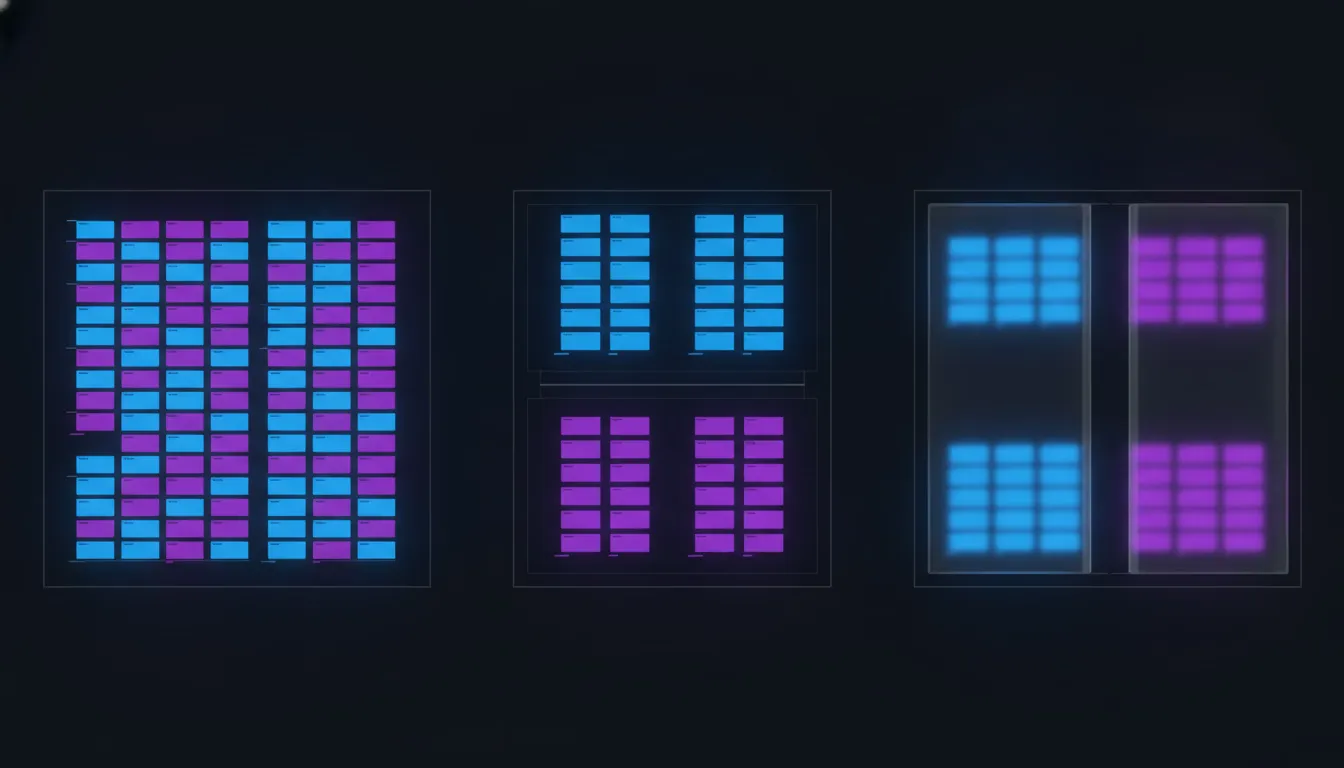
The pooled model is the one most products start with, because it is the cheapest to run and the fastest to build. Every tenant’s rows sit in the same tables, separated only by a tenant identifier column, with row-level security or application-level query filtering enforcing the boundary on every read and write. Postgres row-level security is worth adopting here specifically, because it moves the enforcement into the database itself: a policy tied to the tenant column blocks a cross-tenant read even if the application code forgets to filter, which turns a class of bug that would otherwise reach production into a query that simply returns nothing. The trade-off is a shared blast radius. A slow query from one heavy tenant can degrade performance for everyone else on the same tables, and a bug in a shared migration touches every tenant at once.
Schema-per-tenant sits in the middle, giving each tenant its own schema inside a shared database instance for cleaner logical separation than a shared table without the cost of a separate database server per customer. It reads well on paper, but coordinating a schema migration across a few hundred tenant schemas is real operational work, and most teams underestimate it until they are three hundred schemas deep and a single column rename has become an afternoon-long rollout.
Dedicated, database-per-tenant is the strongest isolation available and the most expensive to operate. Each tenant’s data lives in a physically separate database, so a query bug in your application code has nowhere else to reach even if it tried. This model earns its cost for regulated customers and enterprise contracts with an explicit data-residency clause. Building it for every tenant from day one is usually the wrong call for an early product, because the overhead of managing hundreds of separate database instances arrives long before most tenants need that level of isolation.
Why does an AI agent need a second isolation boundary inside the first?
An AI agent product built for other businesses needs a second boundary nested inside the first, because your customer’s own end users generate the agent activity your customer is looking at, and that inner layer needs the same rigor as the outer one.
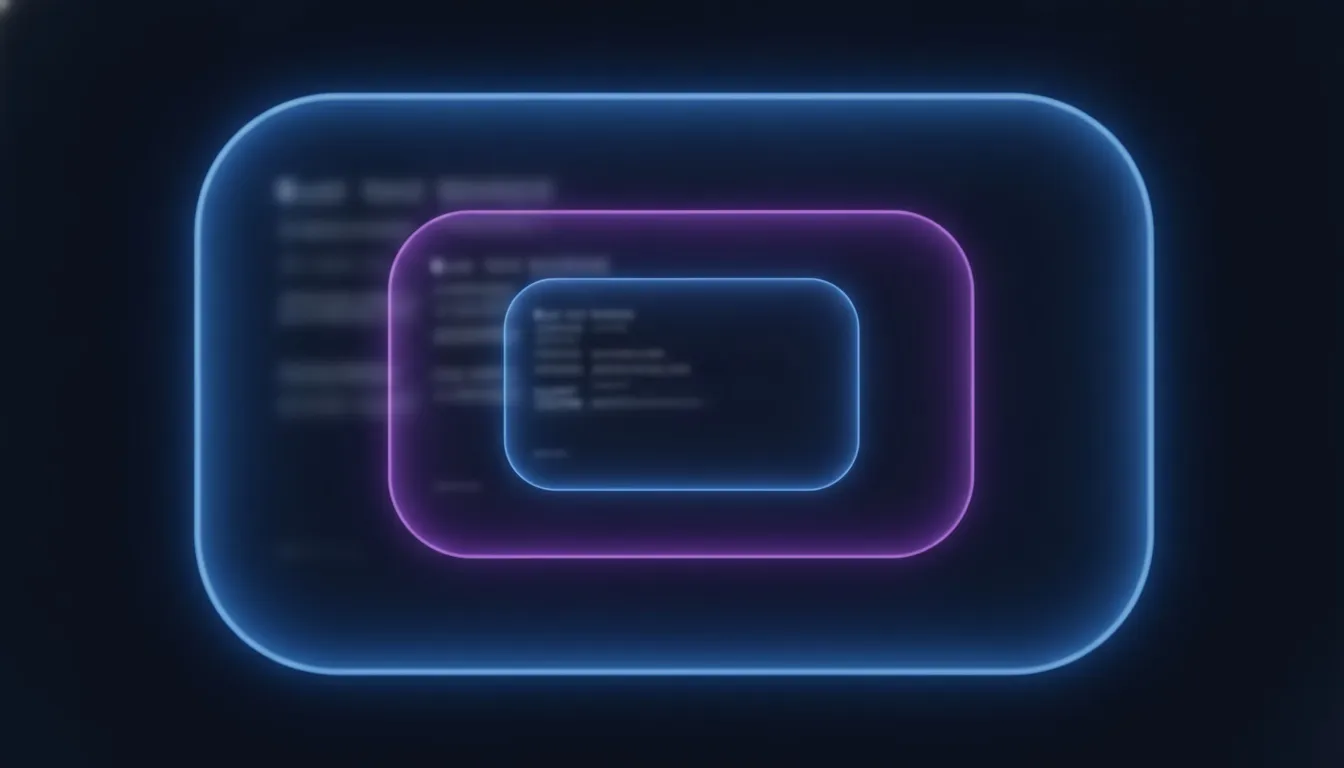
The outer boundary is the one covered above: your org’s data stays separate from every other org on your platform. Almost every multi-tenant SaaS guide stops there, because for most products that single boundary is the whole problem. It is not the whole problem for a B2B2C AI product, where your customer is themselves running an agent for a crowd of their own end users, whether those are their support customers, their sales leads, or their own internal teams. A single events table with only an org identifier column solves the outer boundary and silently ignores the inner one, and the failure mode is specific: a customer’s dashboard aggregates activity across their own sub-accounts or end users in a way nobody asked for and nobody can turn off.
A staffing agency reselling an AI screening assistant to its own corporate clients is a clean example. The agency is your tenant, the outer layer, and each of the agency’s own clients is a second, inner tenant, each expecting to see only their own candidates’ agent activity when the agency shares a dashboard. Get the outer boundary right and the agency’s data stays walled off from every other agency on the platform. Skip the inner one and the agency’s dashboard, or a link they forward to one specific client, quietly shows that client every other client’s data too, a leak a customer notices immediately and does not forget. The fix is tagging every event with both identifiers, the org and the specific end-customer it belongs to, from the moment it is captured, so a query can scope to either layer cleanly instead of computing one aggregate and hoping nobody needs a narrower slice. AiAgRe’s SDK scopes every event to org and end-customer from ingestion for exactly this reason, so the inner boundary is the default rather than a second project you build after the first one ships.
Where does row-based isolation break down for agent memory and traces?
Row-based isolation models assume the thing you are protecting is a row in a table, and an agent’s memory and trace data are not rows, they are a similarity search index and an ordered event stream, each of which needs its own version of the same boundary rather than inheriting one from the database underneath it.

Agent memory is usually backed by a vector store, and a similarity search across a shared collection can surface a phrase-level match from a different tenant’s data even when nothing about the relevance score looks wrong. Filtering the results after the search runs is not the fix, because the search itself already touched data it should never have reached, and a filter applied in application code is a patch on a design that leaked, not a boundary. The fix has to live in the query against the memory store: a hard tenant filter built into the similarity search itself, at the same layer as row-level security in a relational database, not bolted onto the response afterward. See AI agent memory for the full failure modes agent memory runs into beyond isolation specifically.
Trace data has the same shape of problem in a different form. A trace store that filters by tenant in the query layer at read time is only as safe as that filter, and a display-layer bug or a missing clause in one new query path is enough to surface another tenant’s conversation. Tag tenant identity at the moment a trace is captured, not afterward, so a request scoped to one tenant has nothing else in its result set to accidentally return. AI agent observability covers the full instrumentation this boundary sits under, including how to test it directly by writing traces under two fake tenant identities and confirming a cross-tenant query fails cleanly.
Which isolation model fits which tenant, and when is dedicated infrastructure worth paying for?
Match the isolation model to the tenant, not to the whole platform at once: pooled with row-level security for most tenants at launch, schema-per-tenant for mid-market customers once coordinating a shared table becomes the bottleneck, and dedicated infrastructure reserved for the specific tenants whose contract, industry, or scale actually requires it.

Most early products should start pooled, everywhere, including agent memory and traces, with row-level security or an equivalent hard filter doing the enforcement work. It is the cheapest model to run and the fastest to add a new tenant to, and for the first few dozen customers the operational cost of anything stronger rarely pays for itself. The trigger to reconsider is not a fixed tenant count so much as a specific signal: a tenant asking for a data-residency guarantee your pooled model cannot make, a compliance questionnaire that requires demonstrable physical separation, or a single tenant’s query volume large enough to visibly slow down every other tenant sharing the same tables.
When that signal shows up, move only the tenants that triggered it, not the whole platform. A healthcare or financial services customer asking for dedicated infrastructure is a normal request, and building it for that one account while everyone else stays pooled is cheaper and more honest than promising every future enterprise deal the same treatment before anyone has asked for it. This is also where the double multi-tenant boundary interacts with the model choice: a dedicated database still needs the inner org-to-end-customer boundary enforced inside it, since stronger outer isolation does nothing for the inner one on its own.
How do you verify the boundary actually holds, instead of trusting the code?
Verify tenant isolation the same way you would verify any other security boundary, by deliberately trying to break it under controlled conditions, not by reading the code that is supposed to enforce it and deciding it looks correct.

Write data under two separate fake tenant identities, one for each of the surfaces covered above: a few rows in your main tables, a few memory records in your vector store, and a handful of agent traces. Then, using credentials scoped to the first fake tenant, deliberately request the second tenant’s data at each of those three surfaces and confirm every request fails cleanly, returning nothing, rather than silently returning the wrong records. Run the same check against anything you aggregate, not only individual records: a resolution rate or a cost figure computed across “all tenants” instead of “this tenant” is a subtler version of the same leak, and it is the harder one to catch, because the resulting number usually still looks perfectly plausible sitting on its own on a dashboard.
Put this test somewhere it runs automatically, not as a one-time manual check before a launch. A schema change, a new caching layer, or a new query path added six months from now can reopen a boundary that passed cleanly on day one, and the only way to know before a customer does is a test that runs every time the code that touches tenant data changes. Prompt injection testing for tool-calling agents covers a closely related test: confirming an injected instruction cannot make an agent’s own tool calls reach across the same boundary this section is testing directly.
Pick the model before your next tenant signs
Start pooled with row-level security across your database, your memory store, and your trace store, tag every event with both the org and end-customer identifier from the moment it is captured, and write the cross-tenant test described above before you need it rather than after an incident forces the question. Reserve schema-per-tenant and dedicated infrastructure for the specific tenants who actually trigger the need, a compliance requirement, a data-residency clause, a scale problem you can point to, rather than building the strongest model everywhere on the assumption that some future enterprise deal might ask for it.
The database decision is the one every generic multi-tenancy guide already covers well. The part that is actually specific to an AI product, isolating a live agent’s memory and trace data the same way, and nesting a second boundary inside the first for your customer’s own end users, is the part worth getting right early, because it is far cheaper to build the boundary into a new memory store or trace pipeline on day one than to retrofit it once real conversations are already flowing through an unpartitioned index. If you are building the kind of AI product where your own customers will eventually ask what their agent is doing, AiAgRe scopes every event to org and end-customer from ingestion and ties that same tenant-tagged trace data to the white-label dashboard your customers see, so the boundary you build once covers the database, the memory, the traces, and the number on the screen together.
Frequently asked questions
What is tenant isolation in a multi-tenant SaaS product?
Tenant isolation is the set of constructs that block a request scoped to one tenant from reaching another tenant’s data, enforced at the data layer itself rather than through authentication or permission checks alone, which can leave a fully authenticated user able to reach data they were never meant to see.
What is the difference between tenant isolation and data isolation?
The two terms describe the same underlying concept in most conversations. Data isolation is sometimes used more broadly to include compliance and regulatory separation, while tenant isolation specifically emphasizes the technical boundary between one tenant’s resources and another’s, but in practice teams use them interchangeably.
Should a new AI SaaS product use row-level security or a separate schema per tenant?
Start with row-level security on a pooled model for most tenants. It is the cheapest to operate and the fastest to onboard a new tenant into, and Postgres enforces it at the database layer so a missing filter in application code does not become a leak. Move a specific tenant to schema-per-tenant or a dedicated database only when a real signal, a compliance requirement, a data-residency clause, or a measurable performance problem, actually calls for it.
How is tenant isolation different for AI agent memory than for a normal database?
Agent memory usually lives in a vector store, where a similarity search across a shared collection can surface another tenant’s data even when the relevance score looks entirely normal. The boundary has to be enforced inside the search query itself, a hard tenant filter at query time, rather than filtering results after the search already ran, because filtering afterward means the leak already happened before the filter had a chance to catch it.
What is the double multi-tenant problem in an AI agent product?
It is the second isolation boundary a B2B2C AI product needs nested inside the first. The outer boundary keeps your customer’s data separate from every other customer on your platform, the same boundary every SaaS product needs. The inner boundary keeps your customer’s own end users separate from each other, because your customer is themselves running the agent for a crowd of people who each expect their own data to stay their own.
How do you test that a tenant isolation boundary actually works?
Write data under two separate fake tenant identities across every surface that holds tenant data: your main tables, your memory store, and your trace store. Then, using credentials scoped to one fake tenant, deliberately request the other tenant’s data at each surface and confirm every request fails cleanly instead of returning the wrong records. Run this as an automated test on every change that touches tenant data, not as a one-time check before launch.
Related reading: AI agent memory covers the full set of failure modes agent memory runs into beyond isolation, AI agent observability covers tracing and the tenant-tagging pattern the trace boundary in this piece depends on, customer-facing analytics covers the double multi-tenant boundary from the dashboard side, prompt injection testing for tool-calling agents covers a closely related boundary test for tool calls, MCP vs API covers the tool-discovery boundary a third-party MCP server can cross that a direct API integration never exposes, AI agent guardrails covers the blocking layer that stops a cross-tenant action before it ever reaches the isolation boundary this piece tests, and AI agent multi-tenant analytics is the product page for the architecture this piece describes.